
Speaker
Keynote Speakers
Prof. Pingyi Fan
Tsinghua University, China
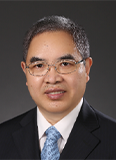
BIO: Dr. Pingyi Fan is a professor of the Department of Electronic Engineering of Tsinghua University. He received Ph.D. degree at the Department of Electronic Engineering of Tsinghua University in 1994. From 1997 to 1999, he visited the Hong Kong University of Science and Technology and the University of Delaware in the United States. He also visited many universities and research institutes in the United States, Europe, Japan, Hong Kong and Singapore. He has obtained many research grants, including national 973 Project, 863 Project, mobile special project and the key R&D program, national natural funds and international cooperation projects. He has published more than 190 SCI papers (more than 130 IEEE journals), and 4 academic books. He also applied for more than 30 national invention patents, 5 international patents and. He won seven best paper awards of international conferences, including IEEE ICC2020 and Globecom 2014, and received the best paper award of IEEE TAOS Technical Committee in 2020, the excellent editor award of IEEE TWC (2009), etc. He has served as the editorial board member of several Journals, including IEEE and MDPI. He is currently the editorial board member of Open Journal of Mathematical Sciences, the deputy director of China Information Theory society, the co-chair of China's 6G-ANA TG4, and the chairman of Network and Communication Technology Committee of IEEE ChinaSIP. His current research interests are in 6G wireless communication network and machine learning, semantic information theory and generalized information theory, big data processing theory, intelligent network and system detection, etc.
Speech Title: Identifying Machines with Sounds: Anomaly Detection with A GAN-based Approach---AEGAN
Abstract: Digital Twins and Industry 4.0 are becoming the most promising trends in the near future for modern industrial manufacturing and production managements. Anomaly detection is the critical issue for them. There are two different ways to do it. One is based on the images or videos observed by using sensors with camera; Another is based on the sensors of audios. In fact, the techniques with images or video can only check the abnormal statuses of the machine or equipment appearing in the surfaces. But the sounds from the machine or equipment can be used to check their inner anomaly statuses. Machine Sounds have been considered as one important feature in future digital twins and industry 4.0. In this talk, we first review the developments of the anomalies identification problem by machine sounding and then present a new generative adversarial network (GAN) which combines GAN with autoencoder, refered to as AEGAN, where anomalies are detected from two complementary perspectives: error reconstruction measured by the generator and embedding features extracted from the discriminator. The experimental results will show that AEGAN reaches the state-of-the-art performance over two DCASE datasets among unsupervised methods, which indicates that the AEGAN performs well on widely-used working scenarios. Finally, some conclusions and future research directions are given.
Prof. Xiangjie Kong
IEEE Senior Member
Zhejiang University of Technology, China
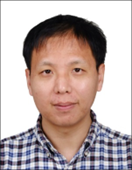
BIO: Dr. Xiangjie Kong is currently a Full Professor in the College of Computer Science & Technology, Zhejiang University of Technology (ZJUT), China. Previously, he was an Associate Professor in School of Software, Dalian University of Technology (DUT), China, where he was the Head of the Department of Cyber Engineering. He is the Founding Director of City Science of Social Computing Lab (The CSSC Lab) (http://cssclab.cn/). He is/was on the Editorial Boards of 6 International journals. He has served as the General Co-Chair, Workshop Chair, Publicity Chair or Program Committee Member of over 30 conferences. Dr. Kong has authored/co-authored over 160 scientific papers in international journals and conferences including IEEE TKDE, ACM TKDD, IEEE TNSE, IEEE TII, IEEE TITS, IEEE NETW, IEEE COMMUN MAG, IEEE TVT, IEEE IOJ, IEEE TSMC, IEEE TETC, IEEE TASE, IEEE TCSS, WWWJ, etc.. 5 of his papers is selected as ESI- Hot Paper (Top 1‰), and 18 papers are ESI-Highly Cited Papers (Top 1%). His research has been reported by Nature Index and other medias. He has been invited as Reviewers for numerous prestigious journals including IEEE TKDE, IEEE TMC, IEEE TNNLS, IEEE TNSE, IEEE TII, IEEE IOTJ, IEEE COMMUN MAG, IEEE NETW, IEEE TITS, TCJ, JASIST, etc.. Dr. Kong has authored/co-authored three books (in Chinese). He has contributed to the development of 14 copyrighted software systems and 20 filed patents. He has an h-index of 41 and i10-index of 100, and a total of more than 5800 citations to his work according to Google Scholar. He is named in the2019 and 2020 world’s top 2% of Scientists List published by Stanford University. Dr. Kong received IEEE Vehicular Technology Society 2020 Best Land Transportation Paper Award, and The Natural Science Fund of Zhejiang Province for Distinguished Young Scholars. He has been invited as Keynote Speaker at 2 international conferences, and delivered a number of Invited Talks at international conferences and many universities worldwide. His research interests include mobile computing, network science, and computational social science. He is a Distinguished Member of CCF, a Senior Member of IEEE, a Full Member of Sigma Xi, and a Member of ACM.
Speech Title: Data and Knowledge Driven Computational Urban Science
Abstract: Modern cities consist of three interconnected spaces: the physical world, human society, and the information space. Urban spatiotemporal data forms the foundation and core of intelligent urban mobility. By leveraging artificial intelligence techniques such as graph learning, the mining and analysis of urban spatiotemporal data can accurately profile travel information within cities, enabling prediction, early warning, and decision support. However, the black-box feature of artificial intelligence brings significant challenges for urban travel profiling. Data and kowledge driven computational urban science offers new perspectives for mining and analyzing urban spatiotemporal data. This talk will present the latest advances in the field of computational urban science.
Prof. Philippe Fournier-Viger
Shenzhen University, China

BIO: Philippe Fournier-Viger (Ph.D) is a Canadian researcher, distinguished professor at Shenzhen University (China). Five years after completing his Ph.D., he came to China in 2015 and became full professor after receiving a talent title from the National Science Foundation of China. He has published more than 375 research papers related to data mining algorithms for complex data (sequences, graphs), intelligent systems and applications, which have received more than 11,000 citations. He is the founder of the popular SPMF data mining library, offering more than 250 algorithms to find patterns in data, cited in more than 1,000 research papers. He is former associate edito-in-chief of the Applied Intelligence journal and has been keynote speaker for over 15 international conferences and co-edited four books for Springer. He is a co-founder of the UDML, PMDB and MLiSE series of workshops held at the ICDM, PKDD, DASFAA and KDD conferences.
Speech Title: Advances and challenges for the automatic discovery of interesting patterns in data
Abstract: Intelligent systems and tools can play an important role in various domains such as for factory automation, e-business, and manufacturing. To build intelligent systems and tools, high-quality data is generally required. Moreover, these systems need to process complex data and can yield large amounts of data such usage logs, images, videos, and data collected from industrial sensors. Managing the data to gain insights and improve these systems is thus a key challenge. It is also desirable to be able to extract information or models from data that are easily understandable by humans. Based on these objectives, this talk will discuss the use of data mining algorithms for discovering interesting and useful patterns in data generated from intelligent systems and other applications.
The talk will first briefly review early study on designing algorithms for identifying frequent patterns. Then, an overview of recent challenges and advances will be presented to identify other types of interesting patterns in more complex data. Topics that will be discussed include high utility patterns, locally interesting patterns, and periodic patterns. Lastly, the SPMF open-source software will be mentioned and opportunities related to the combination of pattern mining algorithms with traditional artificial intelligence techniques for intelligent systems will be discussed.
Assoc. Prof. Pavel Loskot
IEEE Senior Member
Zhejiang University-University of Illinois at Urbana-Champaign Institute (ZJUI), China

BIO: Pavel Loskot joined the ZJU-UIUC Institute in January 2021 as the Associate Professor after being nearly 14 years with Swansea University in the UK. He received his PhD degree in Wireless Communications from the University of Alberta in Canada, and the MSc and BSc degrees in Radioelectronics and Biomedical Electronics, respectively, from the Czech Technical University of Prague in the Czech Republic. He is the Senior Member of the IEEE, Fellow of the Higher Education Academy in the UK, and the Recognized Research Supervisor of the UK Council for Graduate Education. His current research interest focuses on problems involving statistical signal processing and importing methods from Telecommunication Engineering and Computer Science to other disciplines in order to improve the efficiency and the information power of system modeling and analysis.
Speech Title: Working with Structures of Multivariate Stochastic Functions
Abstract: Many practical problems involve non-linear multivariate functions with random inputs. Fortunately, there are methods how to obtain and analyze structures of these functions. The function structures can be then exploited to obtain algorithmic solutions of various complex tasks. The most notable of these representations of multivariate functions assume product factors and/or sum factors. In this talk, I will review strategies and methods for defining or obtaining structured representations of multivariate functions with random inputs, and also mention some applications in modeling data using descriptive and inferential statistics.
Prof. Hemachandran Kannan
Woxsen University, India

BIO: Dr. Hemachandran Kannan has been a passionate teacher with 15 years of teaching experience and 5 years of research experience. A strong educational professional with a scientific bent of mind, highly skilled in AI & Business Analytics. After receiving a Ph.D. in embedded systems, He started focusing on Interdisciplinary research. He served as an effective resource person at various national and international scientific conferences and also gave lectures on topics related to Artificial Intelligence. He was bestowed as Best faculty at Woxsen University in 2021-2022 and also in Ashoka Institute of Engineering & Technology in 2019 – 2020. He is having rich working experience in Natural Language Processing, Computer Vision, Building Video recommendation systems, Building Chatbots for HR policies and Education Sector, Automatic Interview processes, and Autonomous Robots. He is working on various real-time use cases and projects in collaboration with Industries such as Advertflair, LLC, Course5i, and Apstek Corp. He has organized many International Conferences, Hackathons, and assemblies. He owed four patents to his credentials. He has life membership in estimable professional bodies. An open-ended positive person who has a stupendous peer-reviewed publication record with more than 35 journals and international conference publications. His editorial skills made him include as an editorial board member in numerous reputed Scopus / sci journals.
Speech Title: Revolutionizing Agriculture: The Transformative Power of Generative AI Applications
Abstract: In this session, we will delve into the incredible opportunities presented by the intersection of artificial intelligence and agriculture. We will examine the ways in which generative AI can be leveraged to increase crop yields, improve efficiency in farming operations, and promote sustainable agriculture practices. Through real-world examples and cutting-edge research, attendees will come away with a deep understanding of the transformative potential of this powerful technology in the agricultural industry.
Prof. Kannimuthu Subramaniyam
Karpagam College of Engineering, India

BIO: Kannimuthu Subramaniyam is currently working as Professor in the Department of Computer Science and Engineering at Karpagam College of Engineering, Coimbatore, Tamil Nadu, India. He is also Head for the Center of Excellence in Algorithms. He is a member of IEEE (ID: 99320117). He is an IBM Certified Cybersecurity Analyst. He did PhD in Computer Science and Engineering at Anna University, Chennai. He did his M. E (CSE) and B. Tech (IT) at Anna University, Chennai. He has more than 16 years of teaching and industrial experience. He is the recognized supervisor of Anna University, Chennai. Three PhD candidate are completed their research under his guidance. He is now guiding 7 PhD Research Scholars. He has published 60 research articles in various International Journals. He published 2 books ("Artificial Intelligence" & “LinkedList Demystified-A Placement Perspective” and 3 Book Chapters (WOS / Scopus Indexed). He is acting as mentor / consultant for DeepLearning.AI, Hubino, MaxByte Technologies and Dhanvi Info Tech, Coimbatore. He is the expert member for AICTE Student Learning Assessment Project (ASLAP). He has presented a number of papers in various National and International conferences. He has visited more than 100 Engineering colleges and delivered more than 150 Keynote Talks / Guest Lectures on various topics. He is the reviewer for 50 Journals and 3 Books. He has successfully completed the consultancy project through Industry-Institute Interaction for ZF Wind Power Antwerpen Ltd., Belgium. He has received funds from CSIR, DRDO and ISRO to conduct workshops and seminars. He has completed more than 610 Certifications (41 Specializations and 4 Professional Certifications) in Coursera, Hackerrank and NPTEL on various domains. He has guided a number of research-oriented as well as application-oriented projects organized by well-known companies like IBM. He is actively involving in setting up lab for Cloud Computing, Big Data Analytics, Open-Source Software, Internet Technologies etc., His research interests include Artificial Intelligence, Data Structures and Algorithms, Machine Learning, Big Data Analytics, Virtual Reality & Blockchain. One of his research works is incorporated SPMF Open-Source Data Mining Tool. Source: http://www.philippe-fournier-viger.com/spmf/index.php?link=algorithms.php. He Conferred Second Best Team in NLP Challenge as part of FIRE 2019 conference. He secured first Position in NLP Challenge as part of FIRE 2018 Conference.
Speech Title: Analysis of Deep Learning and its roles in Machine Vision
Abstract: Digitalization is firmly entrenched in industrial production, with processes becoming increasingly automated as part of the Industrial Internet of Things (IIoT). Various machines and robots perform more routine production tasks in the IIoT, also known as Industry 4.0. Machine vision technology for automated visual inspection is becoming more accessible and capable thanks to artificial intelligence, specifically machine learning via deep learning. Deep learning mimics how the human brain processes visual input, but with the speed and robustness of a computerised system. The technology ensures quality in the manufacturing industry while also controlling production costs and improving customer satisfaction.
Deep-learning technologies and convolutional neural networks (CNNs) from the field of artificial intelligence (AI) are making their way into machine vision to assist image-processing systems in learning and distinguishing between defects, making identification processes more precise. Traditional image processing and analysis are still used to locate regions of interest within images, which speeds up the overall process and makes it more robust.
CNNs must first be trained before they can be used for deep learning. This training process relates to the object's external features, such as colour, shape, texture, and surface structure. Based on these properties, the objects are classified and allocated more precisely later. A developer must laboriously define and manually verify the individual features in traditional machine vision methods. However, self-learning algorithms are used in deep learning to automatically find and extract unique patterns in order to differentiate between specific classes. In this session, Deep Learning and its roles in Machine Vision are investigated extensively. Real world case studies such as Image classification and Defect detection are discussed in this session.